As addressed this week, middle range theories are frequently used as a framework for exploring nursing practice problems. In addition, theories from other sciences, such as sociology and environmental science, have relevance for nursing practice. For the next few weeks you will explore the use of interdisciplinary theories in nursing.
This Assignment asks you to evaluate two middle range or interdisciplinary theories and apply those theories to a clinical practice problem. You will also create a hypothesis based upon each theory for an evidence-based practice project to resolve a clinical problem.
Note: This Assignment will serve as your Major Assessment for this course.
To prepare:
- Review strategies for evaluating theory presented by Fawcett and Garity in this week’s Learning Resources (see under list of Required Readings and attached pdf file)
- Select a clinical practice problem that can be addressed through an evidence-based practice project. Note: You may continue to use the same practice problem you have been addressing in earlier Discussions and in Week 7 Assignment 1.
- Consider the middle range theories presented this week, and determine if one of those theories could provide a framework for exploring your clinical practice problem. If one or two middle range theories seem appropriate, begin evaluating the theory from the context of your practice problem.
- Formulate a preliminary clinical/practice research question that addresses your practice problem. If appropriate, you may use the same research question you formulated for Assignment #4.
Write a 10- to 12-page paper (including references) in APA format and a minimum of 8 references or more, using material presented in the list of required readings to consider interdisciplinary theories that may be appropriate for exploring your practice problem and research question (refer to the sample paper attached as “Assignment example”). Include the level one headings as numbered below:
1) Introduction with a purpose statement (e.g. The purpose of this paper is…)
2) Briefly describe your selected clinical practice problem.
3) Summarize the two selected theories. Both may be middle range theories or interdisciplinary theories, or you may select one from each category.
4) Evaluate both theories using the evaluation criteria provided in the Learning Resources.
5) Determine which theory is most appropriate for addressing your clinical practice problem. Summarize why you selected the theory. Using the propositions of that theory, refine your clinical / practice research question.
6) conclusion
MY PRACTICE PROBLEM IS AS FOLLOWED:
P: Patients suffering from Type 2 Diabetes Mellitus
I: Who are involved in diabetic self-care programs
C: Compared to those who do not participate in self-care programs
O: Are more likely to achieve improved glycemic control
THE THEORIES USED FOR THIS MODEL ARE:
Dorothea Orem Self-Care Theory and The Self-Efficacity in nursing Theory by Lenz & Shortridge-Baggett, or the Health Promotion Model by Pender, Murdaugh & Parson (Pick 2)
Required Readings
McEwin, M., & Wills, E.M. (2014). Theoretical basis for nursing. (4th ed.). Philadelphia, PA: Wolters Kluwer Health.
- Chapter 10, “Introduction to Middle Range Nursing Theories”
Chapter 10 begins the exploration of middle range theories and discusses their development, refinement, and use in research.
- Chapter 11, “Overview of Selected Middle Range Nursing Theories”
Chapter 11 continues the examination of middle range theories and provides an in-depth examination of a select set of theories
· Chapter 15, “Theories from the Biomedical Sciences”
Chapter 15 highlights some of the most commonly used theories and principles from the biomedical sciences and illustrates how they are applied to studies conducted by nurses and in nursing practice.
· Chapter 16, “Theories, Models, and Frameworks from Administration and Management”
Chapter 16 presents leadership and management theories utilized in advanced nursing practice.
· Chapter 18, “Application of Theory in Nursing Practice”
Chapter 18 examines the relationship between theory and nursing practice. It discusses how evidence-based practice provides an opportunity to utilize research and theory to improve patient outcomes, health care, and nursing practice.
Gray, J.R., Grove, S.K., & Sutherland, S. (2017). Burns and Grove’s the practice of nursing research: Appraisal, synthesis, and generation of evidence (8th ed.). St. Louis, MO: Saunders Elsevier.
- Chapter 6, “Objectives, Questions, Variables, and Hypotheses”
Chapter 6 guides nurses through the process of identifying research objectives, developing research questions, and creating research hypotheses.
· Review Chapter 2, “Evolution of Research in Building Evidence-Based Nursing Practice”
· Chapter 19, “Evidence Synthesis and Strategies for Evidence-Based Practice”
This section of Chapter 19 examines the implementation of the best research evidence to practice.
Fawcett, J., & Garity, J. (2009). Chapter 6: Evaluation of middle-range theories. Evaluating Research for Evidence-Based Nursing. Philadelphia, Pennsylvania: F. A. Davis.
Note: You will access this article from the Walden Library databases.
This book chapter evaluates the use and significance of middle-range theories in nursing research and clinical practice.
DeSanto-Madeya, S., & Fawcett, J. (2009). Toward Understanding and Measuring Adaptation Level in the Context of the Roy Adaptation Model. Nursing Science Quarterly, 22(4), 355–359.
Note: You will access this article from the Walden Library databases.
This article describes how the Roy Adaptation Model (RAM) is used to guide nursing practice, research, and education in many different countries.
Jacelon, C., Furman, E., Rea, A., Macdonald, B., & Donoghue, L. (2011). Creating a professional practice model for postacute care: Adapting the Chronic Care Model for long-term care. Journal of Gerontological Nursing, 37(3), 53–60.
Note: You will access this article from the Walden Library databases.
This article addresses the need to redesign health care delivery to better meet the needs of individuals with chronic illness and health problems.
Murrock, C. J., & Higgins, P. A. (2009). The theory of music, mood and movement to improve health outcomes. Journal of Advanced Nursing, 65 (10), 2249–2257. doi:10.1111/j.1365-2648.2009.05108.x
Note: You will access this article from the Walden Library databases.
This article discusses the development of a middle-range nursing theory on the effects of music on physical activity and improved health outcomes.
Amella, E. J., & Aselage, M. B. (2010). An evolutionary analysis of mealtime difficulties in older adults with dementia. Journal of Clinical Nursing, 19(1/2), 33–41. doi:10.1111/j.1365-2702.2009.02969.x
Note: You will access this article from the Walden Library databases.
This article presents findings from a meta-analysis of 48 research studies that examined mealtime difficulties in older adults with dementia.
Frazier, L., Wung, S., Sparks, E., & Eastwood, C. (2009). Cardiovascular nursing on human genomics: What do cardiovascular nurses need to know about congestive heart failure? Progress in Cardiovascular Nursing, 24(3), 80–85.
Note: You will access this article from the Walden Library databases.
This article discusses current genetics research on the main causes of heart failure.
Mahon, S. M. (2009). Cancer Genomics: Cancer genomics: Advocating for competent care for families. Clinical Journal of Oncology Nursing, 13(4), 373–3 76.
Note: You will access this article from the Walden Library databases.
This article advocates for nurses to stay abreast of the rapid changes in cancer prevention research and its application to clinical practice.
Mayer, K. H., Venkatesh, K. K. (2010). Antiretroviral therapy as HIV prevention: Status and prospects. American Journal of Public Health, 100(10), 1867–1 876. doi: 10.2105/AJPH.2009.184796
Note: You will access this article from the Walden Library databases.
This article provides an in-depth examination of potential HIV transmission prevention.
Pestka, E. L., Burbank, K. F., & Junglen, L. M. (2010). Improving nursing practice with genomics. Nursing Management, 41(3), 40–44. doi: 10.1097/01.NUMA.0000369499.99852.c3
Note: You will access this article from the Walden Library databases.
This article provides an overview of genomics and how nurses can apply it in practice.
Yao, L., & Algase, D. (2008). Emotional intervention strategies for dementia-related behavior: A theory synthesis. The Journal of Neuroscience Nursing, 40(2), 106–115.
Note: You will access this article from the Walden Library databases.
This article discusses a new model that was developed from empirical and theoretical evidence to examine intervention strategies for patients with dementia.
Fineout-Overholt, E., Williamson, K., Gallagher-Ford, L., Melnyk, B., & Stillwell, S. (2011). Following the evidence: Planning for sustainable change. The American Journal Of Nursing, 111(1), 54–60.
This article outlines the efforts made as a result of evidence-based practice to develop rapid response teams and reduce unplanned ICU admissions.
Kleinpell, R. (2010). Evidence-based review and discussion points. American Journal of Critical Care, 19(6), 530–531.
This report provides a review of an evidence-based study conducted on patients with aneurismal subarachnoid hemorrhage and analyzes the validity and quality of the research.
Koh, H. (2010). A 2020 vision for healthy people. The New England Journal Of Medicine, 362(18), 1653–1656.
This article identifies emerging public health priorities and helps to align health-promotion resources, strategies, and research.
Moore, Z. (2010). Bridging the theory-practice gap in pressure ulcer prevention. British Journal of Nursing, 19(15), S15–S18.
This article discusses the largely preventable problem of pressure ulcers and the importance of nurses being well-informed of current prevention strategies.
Musker, K. (2011). Nursing theory-based independent nursing practice: A personal experience of closing the theory-practice gap. Advances In Nursing Science, 34(1), 67–77.
This article discusses how personal and professional knowledge can be used in concert with health theories to positively influence nursing practice.
Roby, D., Kominski, G., & Pourat, N. (2008). Assessing the barriers to engaging challenging populations in disease management programs: The Medicaid experience. Disease Management & Health Outcomes, 16(6), 421–428.
This article explores the barriers associated with chronic illness care and other factors faced by disease management programs for Medicaid populations.
Sobczak, J. (2009). Managing high-acuity-depressed adults in primary care. Journal of the American Academy of Nurse Practitioners, 21(7), 362–370. doi: 10.1111/j.1745-7599.2009.00422.x
This article discusses a method found which positively impacts patient outcomes used with highly-acuity-depressed patients.
Thorne, S. (2009). The role of qualitative research within an evidence-based context: Can metasynthesis be the answer? International Journal of Nursing Studies, 46(4), 569–575. doi: 10.1016/j.ijnurstu.2008.05.001
The article explores the use of qualitative research methodology with the current evidence-based practice movement.
Optional Resources
McCurry, M., Revell, S., & Roy, S. (2010). Knowledge for the good of the individual and society: Linking philosophy, disciplinary goals, theory, and practice. Nursing Philosophy, 11(1), 42–52.
Calzone, K. A., Cashion, A., Feetham, S., Jenkins, J., Prows, C. A., Williams, J. K., & Wung, S. (2010). Nurses transforming health care using genetics and genomics. Nursing Outlook, 58(1), 26–35. doi: 10.1016/j.outlook.2009.05.001
McCurry, M., Revell, S., & Roy, S. (2010). Knowledge for the good of the individual and society: Linking philosophy, disciplinary goals, theory, and practice. Nursing Philosophy, 11(1), 42–52.


>Computer Science homework help
UncategorizedYour paper should meet the following requirements:
Educational Planning: Transition to Baccalaureate Nursing Rationale Essay
UncategorizedEducational Planning: Transition to Baccalaureate Nursing Rationale Essay – Instructions The Rationale Essay is a scholarly paper which you write to explain your degree plan. It describes how previous credits from other colleges and prior knowledge will blend with current studies to create the Bachelor of Science in Nursing (BSN) degree at SUNY Empire State College. The Nursing Assessment Committee approves your degree plan and rationale essay as a step in recommending the student for graduation. The degree plan must meet all of the following criteria: Degree Total credits Maximum advanced standing credits Minimum liberal studies credits Minimum SUNY.esc.edu/esconline/across_esc/academics.nsf/db1a77fb2f6bcf2085256bfa005466b0/4aef4626e390ff3e85256c1d00480fcc?OpenDocument”>general education .esc.edu/esconline/across_esc/academics.nsf/db1a77fb2f6bcf2085256bfa005466b0/4aef4626e390ff3e85256c1d00480fcc?OpenDocument”>credits Minimum advanced-level credits in your concentration Minimum advanced-level credits in your program B.S. in Nursing 124 93 62 30 40 45 Compose a 3-5 page paper following the.google.com/file/d/0B_MQFi-Mv1-yQi04RW8zLW1GU0k/edit?pli=1″>Written Assignment Rubric.png” alt=”Title: image of an icon that represents “opens in a new window” – description: image of an icon that represents “opens in a new window””>, including all requirements of APA format. There are eight sections to your Rationale Essay; the content for each section is outlined below. Unless otherwise stated, each of these sections should be used as a Level 1 heading in your paper “Centered, Boldface, Uppercase and Lowercase Heading” (American Psychological Association, 2010, p. 62). Sections of Paper: 1. Introduction: (no heading) briefly introduce the purpose of this paper to the reader and provide an overview of the key areas that will be addressed. 2. Goals in Pursuing the Bachelor of Science in Nursing: Drafted in Modules 1 and 2 · Describe your personal and professional goals in pursuing the BSN · Discuss what new knowledge, skills, and experiences you wish to develop during the program 3. Expectations of the Nursing Professional:Review and revise your content from the Discussion in Module 2 · Describe the professional expectations of the nurse with a baccalaureate degree · Discuss the professional opportunities that are available to the nurse with a baccalaureate degree and how your role might change 4. Academic Expectations:See Learning Activity in Module 2-Address how your degree plan will meet all of the following requirements. Indicate the number of credits being transferred in from other sources and the number of credits to be completed with SUNY Empire State College: · Bachelor of Science degree requirements at SUNY Empire State College (124 credits total) · SUNY General Education requirements (7 out of 10 knowledge areas; at least 30 credits) i. Math – required area ii. Basic Communication – required area · Required number of advanced level credits (at least 45 credits) · Required number of liberal credits (at least 62 credits) · Required nursing credits (at least 40 credits, advanced level) · ESC studies – 31 credits minimum 5. Degree Plan Narrative: · Identify that you will be taking the nine core nursing courses as required by the program. If you are taking each of these courses, there is no need to list them all by name… OR … · Identify modifications to the nursing core sequence if you are using transcript credit from another college or are planning to use the Prior Learning Assessment (PLA) process to meet the any of the nursing courses · Explain how your nursing elective will be met · Describe the courses you will use to meet any outstanding general education requirements. · Discuss any additional CBE/PLA credit that you intend to pursue with this degree · Identify the proposed timeline to degree completion 6. Conclusion: write a brief paragraph to summarize the key points of the paper 7. References: include any references as a separate last page of the essay, but before the planning grid 8. Degree Plan Grid: Drafted in Module 3 · Identify (by name) the courses and college term for completion · Outline the proposed sequence and course of study · Add a page break after the reference page (or final narrative if no references are used), and then include the Planning Grid as your final page. References American Psychological Association. (2010). Publication manual of the American Psychological Association (6th ed.). Washington, DC: Author.
APPLY LEADERSHIP CONCEPTS SKILLS AND DECISION MAKING IN THE PROVISION OF HIGH QUALITY NURSING CARE
Nursing HomeworksAPPLY LEADERSHIP CONCEPTS SKILLS AND DECISION MAKING IN THE PROVISION OF HIGH QUALITY NURSING CARE
Guidelines
Purpose
The purpose of this assignment is to develop a SMART-formatted goal related to your professional leadership applicable to your current practice setting or future leadership aspirations. This goal is about YOUR leadership development, not those of the organization or the department where you work. Many organizations have developed the SMART-goal framework as they strive for performance improvement. Your goal may tie to one of the departmental or organizational SMART goals but the components of the goal are about YOUR leadership development The Institute of Medicine’s quality initiative has identified five core healthcare profession competencies. This assignment focuses on only two of those initiatives. Either Patient-Centered Care or Working in Interdisciplinary and/or Interprofessional Teams will serve as a framework for identification of YOUR leadership SMART goal.
Course Outcomes
Completion of this assignment enables the student to meet the following course outcomes.
CO 1: Apply leadership concepts, skills, and decision making in the provision of high quality nursing care, healthcare team management, and the oversight and accountability for care delivery in a variety of settings. (PO #2)
CO 4: Apply concepts of leadership and team coordination to promote the achievement of safe and quality outcomes of care for diverse populations. (PO #4)
CO 5: Apply improvement methods, based on data from the outcomes of care processes, to design and test changes to continuously improve the quality and safety of healthcare. (PO #8)
CO 8: Apply concepts of quality and safety using structure, process, and outcome measures to identify clinical questions as the beginning process of changing current practice. (PO #8)
This assignment consists of the completion of the My Leadership SMART Goal paper. Submit assignment to the Dropbox by Sunday, 11:59 p.m. MT, by the end of Week 4.
Points
This assignment is worth 200 points.
Directions
Review the Institute of Medicine’s (IOM) core healthcare competencies. Select ONE of the competencies that you will work on for developing a Leadership SMART Goal. You are to select one of the following competencies for YOUR SMART goal.
Managing Patient-Centered Care or
Working in interdisciplinary and/or interprofessional teams;
S – Specific (Who besides YOU is involved in the goal, what is YOUR goal, where will it take place?)
M – Measurable (How are YOU going to achieve the goal?) Be specific with measureable outcomes.
A – Attainable (What resources and/or experts are available to assist YOU with attaining YOUR goal?)
R – Realistic (Is YOUR goal something that is realistically obtainable in YOUR professional practice?) Be specific.
T – Time bound (What specific dates or weeks will YOU accomplish each task related to your leadership goal?)
Note: This particular example relates to Core Competency: Managing Patient-Centered Care.
This example is a SMART goal that is Specific, Measurable, Attainable, Realistic, and Time-bound.
S-Specific
M-Measurable
A-Attainable
R-Realistic
T-Time bound
Grading Criteria: My Leadership SMART Goal
Grading Rubric for My Leadership SMART Goal
70 points
59–63 points
53–58 points
34–36 points
30–33 points
Discusses measurement outcomes in detail.
55–60 points
Describes only some of the chosen scholarly articles and websites to achieve the goal.
Clearly discusses measurement outcomes but some portions are missing.
50–54 points
Outcomes are vague.
46–49 points
Does not indicate how scholarly articles and websites will achieve the goal.
Outcomes are not apparent.
0–45 points
Middle Range or Interdisciplinary Theory Evaluation
UncategorizedAs addressed this week, middle range theories are frequently used as a framework for exploring nursing practice problems. In addition, theories from other sciences, such as sociology and environmental science, have relevance for nursing practice. For the next few weeks you will explore the use of interdisciplinary theories in nursing.
This Assignment asks you to evaluate two middle range or interdisciplinary theories and apply those theories to a clinical practice problem. You will also create a hypothesis based upon each theory for an evidence-based practice project to resolve a clinical problem.
Note: This Assignment will serve as your Major Assessment for this course.
To prepare:
Write a 10- to 12-page paper (including references) in APA format and a minimum of 8 references or more, using material presented in the list of required readings to consider interdisciplinary theories that may be appropriate for exploring your practice problem and research question (refer to the sample paper attached as “Assignment example”). Include the level one headings as numbered below:
1) Introduction with a purpose statement (e.g. The purpose of this paper is…)
2) Briefly describe your selected clinical practice problem.
3) Summarize the two selected theories. Both may be middle range theories or interdisciplinary theories, or you may select one from each category.
4) Evaluate both theories using the evaluation criteria provided in the Learning Resources.
5) Determine which theory is most appropriate for addressing your clinical practice problem. Summarize why you selected the theory. Using the propositions of that theory, refine your clinical / practice research question.
6) conclusion
MY PRACTICE PROBLEM IS AS FOLLOWED:
P: Patients suffering from Type 2 Diabetes Mellitus
I: Who are involved in diabetic self-care programs
C: Compared to those who do not participate in self-care programs
O: Are more likely to achieve improved glycemic control
THE THEORIES USED FOR THIS MODEL ARE:
Dorothea Orem Self-Care Theory and The Self-Efficacity in nursing Theory by Lenz & Shortridge-Baggett, or the Health Promotion Model by Pender, Murdaugh & Parson (Pick 2)
Required Readings
McEwin, M., & Wills, E.M. (2014). Theoretical basis for nursing. (4th ed.). Philadelphia, PA: Wolters Kluwer Health.
Chapter 10 begins the exploration of middle range theories and discusses their development, refinement, and use in research.
Chapter 11 continues the examination of middle range theories and provides an in-depth examination of a select set of theories
· Chapter 15, “Theories from the Biomedical Sciences”
Chapter 15 highlights some of the most commonly used theories and principles from the biomedical sciences and illustrates how they are applied to studies conducted by nurses and in nursing practice.
· Chapter 16, “Theories, Models, and Frameworks from Administration and Management”
Chapter 16 presents leadership and management theories utilized in advanced nursing practice.
· Chapter 18, “Application of Theory in Nursing Practice”
Chapter 18 examines the relationship between theory and nursing practice. It discusses how evidence-based practice provides an opportunity to utilize research and theory to improve patient outcomes, health care, and nursing practice.
Gray, J.R., Grove, S.K., & Sutherland, S. (2017). Burns and Grove’s the practice of nursing research: Appraisal, synthesis, and generation of evidence (8th ed.). St. Louis, MO: Saunders Elsevier.
Chapter 6 guides nurses through the process of identifying research objectives, developing research questions, and creating research hypotheses.
· Review Chapter 2, “Evolution of Research in Building Evidence-Based Nursing Practice”
· Chapter 19, “Evidence Synthesis and Strategies for Evidence-Based Practice”
This section of Chapter 19 examines the implementation of the best research evidence to practice.
Fawcett, J., & Garity, J. (2009). Chapter 6: Evaluation of middle-range theories. Evaluating Research for Evidence-Based Nursing. Philadelphia, Pennsylvania: F. A. Davis.
Note: You will access this article from the Walden Library databases.
This book chapter evaluates the use and significance of middle-range theories in nursing research and clinical practice.
DeSanto-Madeya, S., & Fawcett, J. (2009). Toward Understanding and Measuring Adaptation Level in the Context of the Roy Adaptation Model. Nursing Science Quarterly, 22(4), 355–359.
Note: You will access this article from the Walden Library databases.
This article describes how the Roy Adaptation Model (RAM) is used to guide nursing practice, research, and education in many different countries.
Jacelon, C., Furman, E., Rea, A., Macdonald, B., & Donoghue, L. (2011). Creating a professional practice model for postacute care: Adapting the Chronic Care Model for long-term care. Journal of Gerontological Nursing, 37(3), 53–60.
Note: You will access this article from the Walden Library databases.
This article addresses the need to redesign health care delivery to better meet the needs of individuals with chronic illness and health problems.
Murrock, C. J., & Higgins, P. A. (2009). The theory of music, mood and movement to improve health outcomes. Journal of Advanced Nursing, 65 (10), 2249–2257. doi:10.1111/j.1365-2648.2009.05108.x
Note: You will access this article from the Walden Library databases.
This article discusses the development of a middle-range nursing theory on the effects of music on physical activity and improved health outcomes.
Amella, E. J., & Aselage, M. B. (2010). An evolutionary analysis of mealtime difficulties in older adults with dementia. Journal of Clinical Nursing, 19(1/2), 33–41. doi:10.1111/j.1365-2702.2009.02969.x
Note: You will access this article from the Walden Library databases.
This article presents findings from a meta-analysis of 48 research studies that examined mealtime difficulties in older adults with dementia.
Frazier, L., Wung, S., Sparks, E., & Eastwood, C. (2009). Cardiovascular nursing on human genomics: What do cardiovascular nurses need to know about congestive heart failure? Progress in Cardiovascular Nursing, 24(3), 80–85.
Note: You will access this article from the Walden Library databases.
This article discusses current genetics research on the main causes of heart failure.
Mahon, S. M. (2009). Cancer Genomics: Cancer genomics: Advocating for competent care for families. Clinical Journal of Oncology Nursing, 13(4), 373–3 76.
Note: You will access this article from the Walden Library databases.
This article advocates for nurses to stay abreast of the rapid changes in cancer prevention research and its application to clinical practice.
Mayer, K. H., Venkatesh, K. K. (2010). Antiretroviral therapy as HIV prevention: Status and prospects. American Journal of Public Health, 100(10), 1867–1 876. doi: 10.2105/AJPH.2009.184796
Note: You will access this article from the Walden Library databases.
This article provides an in-depth examination of potential HIV transmission prevention.
Pestka, E. L., Burbank, K. F., & Junglen, L. M. (2010). Improving nursing practice with genomics. Nursing Management, 41(3), 40–44. doi: 10.1097/01.NUMA.0000369499.99852.c3
Note: You will access this article from the Walden Library databases.
This article provides an overview of genomics and how nurses can apply it in practice.
Yao, L., & Algase, D. (2008). Emotional intervention strategies for dementia-related behavior: A theory synthesis. The Journal of Neuroscience Nursing, 40(2), 106–115.
Note: You will access this article from the Walden Library databases.
This article discusses a new model that was developed from empirical and theoretical evidence to examine intervention strategies for patients with dementia.
Fineout-Overholt, E., Williamson, K., Gallagher-Ford, L., Melnyk, B., & Stillwell, S. (2011). Following the evidence: Planning for sustainable change. The American Journal Of Nursing, 111(1), 54–60.
This article outlines the efforts made as a result of evidence-based practice to develop rapid response teams and reduce unplanned ICU admissions.
Kleinpell, R. (2010). Evidence-based review and discussion points. American Journal of Critical Care, 19(6), 530–531.
This report provides a review of an evidence-based study conducted on patients with aneurismal subarachnoid hemorrhage and analyzes the validity and quality of the research.
Koh, H. (2010). A 2020 vision for healthy people. The New England Journal Of Medicine, 362(18), 1653–1656.
This article identifies emerging public health priorities and helps to align health-promotion resources, strategies, and research.
Moore, Z. (2010). Bridging the theory-practice gap in pressure ulcer prevention. British Journal of Nursing, 19(15), S15–S18.
This article discusses the largely preventable problem of pressure ulcers and the importance of nurses being well-informed of current prevention strategies.
Musker, K. (2011). Nursing theory-based independent nursing practice: A personal experience of closing the theory-practice gap. Advances In Nursing Science, 34(1), 67–77.
This article discusses how personal and professional knowledge can be used in concert with health theories to positively influence nursing practice.
Roby, D., Kominski, G., & Pourat, N. (2008). Assessing the barriers to engaging challenging populations in disease management programs: The Medicaid experience. Disease Management & Health Outcomes, 16(6), 421–428.
This article explores the barriers associated with chronic illness care and other factors faced by disease management programs for Medicaid populations.
Sobczak, J. (2009). Managing high-acuity-depressed adults in primary care. Journal of the American Academy of Nurse Practitioners, 21(7), 362–370. doi: 10.1111/j.1745-7599.2009.00422.x
This article discusses a method found which positively impacts patient outcomes used with highly-acuity-depressed patients.
Thorne, S. (2009). The role of qualitative research within an evidence-based context: Can metasynthesis be the answer? International Journal of Nursing Studies, 46(4), 569–575. doi: 10.1016/j.ijnurstu.2008.05.001
The article explores the use of qualitative research methodology with the current evidence-based practice movement.
Optional Resources
McCurry, M., Revell, S., & Roy, S. (2010). Knowledge for the good of the individual and society: Linking philosophy, disciplinary goals, theory, and practice. Nursing Philosophy, 11(1), 42–52.
Calzone, K. A., Cashion, A., Feetham, S., Jenkins, J., Prows, C. A., Williams, J. K., & Wung, S. (2010). Nurses transforming health care using genetics and genomics. Nursing Outlook, 58(1), 26–35. doi: 10.1016/j.outlook.2009.05.001
McCurry, M., Revell, S., & Roy, S. (2010). Knowledge for the good of the individual and society: Linking philosophy, disciplinary goals, theory, and practice. Nursing Philosophy, 11(1), 42–52.
Criminal homework help
UncategorizedBoth questions need to be answered! I have uploaded the text book and lessons that my professor wants me to use to answer the questions.
THE CONTINUING INVESTIGATION: LEADS, WITNESSES, INTERVIEWS AND INTERROGATION
4-5 pages – 33 points – ⅓ of the course grade APA format 12 in font, Times New Roman double spaced.
DUE SATURDAY, NOVEMBER 14, 2020 at 2:00PM
QUESTION # 1- APPLICATION EXERCISE
Utilizing the course concepts from Lesson # 6 – The Continuing Investigation and Lesson #7 – Locating Witnesses, and from the readings in the textbook on pages 103-116 and pages 61-64, discuss how you would approach the following hypothetical case scenario. Include in your discussion the following concepts:
Basic Leads
Background Investigation
Sources of Information
Neighborhood Canvass
Pleas for Public Cooperation
You are a detective assigned to the Homicide Unit of the Hudson County Prosecutor’s Office in Jersey City.
You have been assigned as Case Detective to investigate a homicide on the campus of New Jersey City University.
On October 25, 2020 , at approximately 9:30 pm, the Jersey City Police Department received a 911 call to respond to NJCU on the report of a deceased person discovered in a vehicle parked in Lot # 7, adjacent to the West Campus Village Dormitory. The victim, a female student resident of the dormitory, was found sitting in the driver’s seat of the vehicle, apparently strangled to death. The following pieces of information emerged from the crime scene:
The crime scene has already been processed with the Crime-Scene Follow-Up sketching, photography, evidence search and collection having been completed. Fingerprints were lifted from the vehicle door. Blood and skin fragments were taken from the victim’s fingernails. Evidence found at the scene is now in custody at the Prosecutor’s Office or has been sent to the New Jersey State Police Laboratory for analysis.
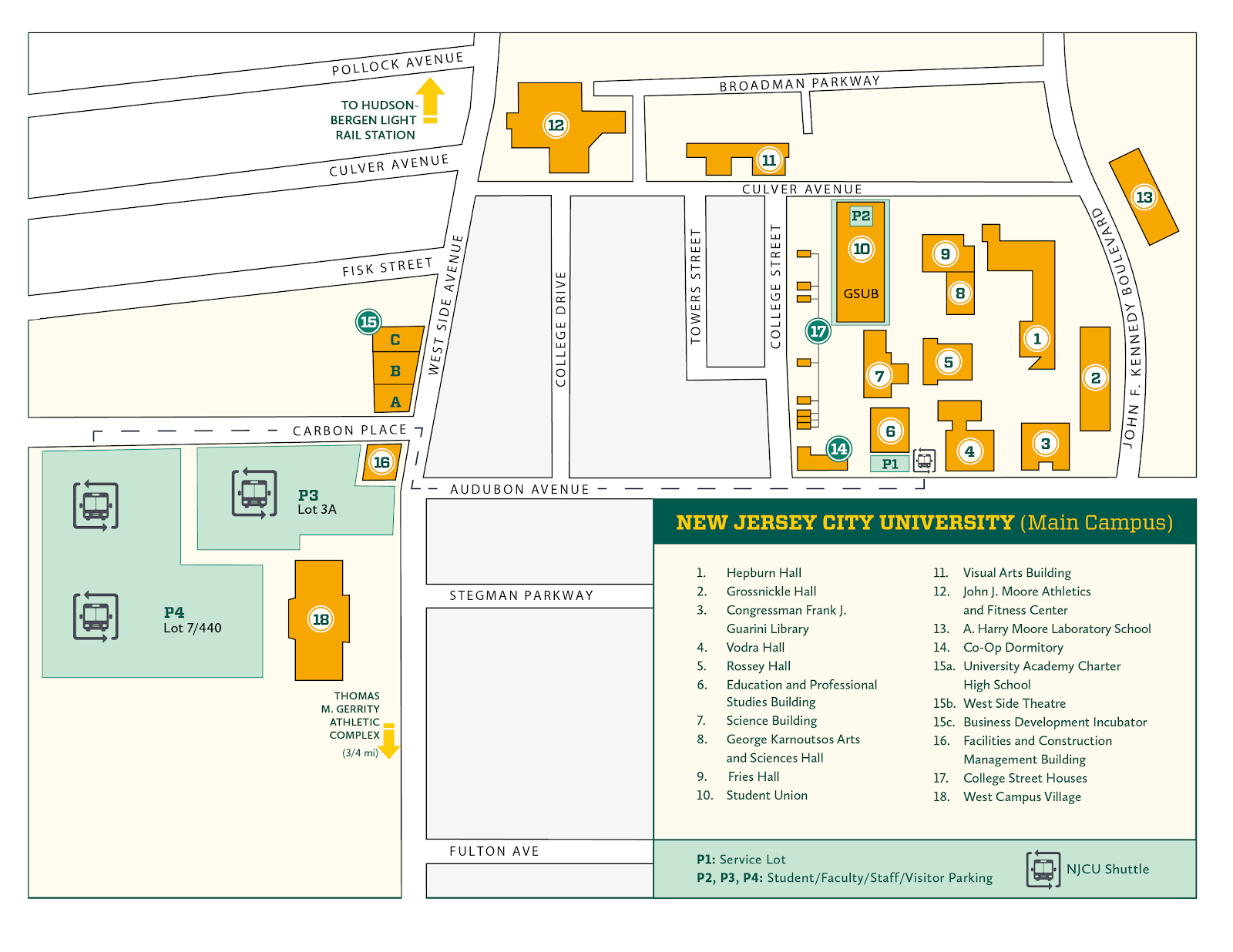
You are now directing the Continuing Investigation and are in the Critical Period (“The First 48”). Beginning with a Rational Theory of the Crime (based on the findings at the crime scene), and then developing Basic Leads, how would you proceed with this investigation?
Below is a map of the NJCU campus showing the crime scene: Location P4, Lot 7 , located between The West Campus Village Dormitory and Rt 440.
QUESTION # 2- DISCUSSION QUESTION
Utilizing the concepts from Lesson # 9 – Interviewing Witnesses, and Lesson # 10 – Interrogating Suspects, and the readings in the textbook on pages 134-138; 142-149
Explain both the similarities and differences between Interviewing and Interrogation.
Analyze how data collection and access can be used to derive knowledge in a healthcare setting
UncategorizedQuestion Description
What Is Informatics?
Accessible player –Downloads– Download Video w/CC Download Audio Download Transcript
Laureate Education (Producer). (2018). What is Informatics? [Video file]. Baltimore, MD: Author.
Learning Objectives
Students will:
Photo Credit: [IAN HOOTON]/[Science Photo Library]/Getty Images
Learning Resources
Note: To access this week’s required library resources, please click on the link to the Course Readings List, found in the Course Materials section of your Syllabus.
Required Readings
McGonigle, D., & Mastrian, K. G. (2017). Nursing informatics and the foundation of knowledge (4th ed.). Burlington, MA: Jones & Bartlett Learning.
24Slides. (2018). How to make an infographic in PowerPoint. Retrieved September 27, 2018, from https://24slides.com/presentbetter/how-make-infographic-powerpoint/
Nagle, L., Sermeus, W., & Junger, A. (2017). Evolving role of the nursing informatics specialist. In J. Murphy, W. Goossen, & P. Weber (Eds.), Forecasting Competencies for Nurses in the Future of Connected Health (212–221). Clifton, VA: IMIA and IOS Press. Retrieved from https://serval.unil.ch/resource/serval:BIB_4A0FEA56B8CB.P001/REF
Sweeney, J. (2017). Healthcare informatics. Online Journal of Nursing Informatics, 21(1).
Note: You will access this article from the Walden Library databases.
Required Media
Laureate Education (Producer). (2018). Health Informatics and Population Health: Trends in Population Health[Video file]. Baltimore, MD: Author.
Accessible player –Downloads– Download Video w/CC Download Audio Download Transcript
Public Health Informatics Institute. (2017). Public Health Informatics: “translating” knowledge for health [Video file]. Retrieved from https://www.youtube.com/watch?v=fLUygA8Hpfo.
Discussion: The Application of Data to Problem-Solving
In the modern era, there are few professions that do not to some extent rely on data. Stockbrokers rely on market data to advise clients on financial matters. Meteorologists rely on weather data to forecast weather conditions, while realtors rely on data to advise on the purchase and sale of property. In these and other cases, data not only helps solve problems, but adds to the practitioner’s and the discipline’s body of knowledge.
Of course, the nursing profession also relies heavily on data. The field of nursing informatics aims to make sure nurses have access to the appropriate date to solve healthcare problems, make decisions in the interest of patients, and add to knowledge.
In this Discussion, you will consider a scenario that would benefit from access to data and how such access could facilitate both problem-solving and knowledge formation.
To Prepare:
By Day 3 of Week 1
Write a description of the focus of your scenario. Describe the data that could be used and how the data might be collected and accessed. What knowledge might be derived from that data? How would a nurse leader use clinical reasoning and judgment in the formation of knowledge from this experience?
The Nurse Leader as Knowledge Worker
The term “knowledge worker” was first coined by management consultant and author Peter Drucker in his book, The Landmarks of Tomorrow (1959). Drucker defined knowledge workers as high-level workers who apply theoretical and analytical knowledge, acquired through formal training, to develop products and services. Does this sound familiar?
Nurses are very much knowledge workers. What has changed since Drucker’s time are the ways that knowledge can be acquired. The volume of data that can now be generated and the tools used to access this data have evolved significantly in recent years and helped healthcare professionals (among many others) to assume the role of knowledge worker in new and powerful ways.
In this Assignment, you will consider the evolving role of the nurse leader and how this evolution has led nurse leaders to assume the role of knowledge worker. You will prepare a presentation with an infographic to educate others on the role of nurse as knowledge worker.
Reference: Drucker, P. (1959). The landmarks of tomorrow. New York, NY: HarperCollins Publishers.
To Prepare:
The Assignment:
NOTE: For guidance on infographics, including how to create one in PowerPoint, see “How to Make an Infographic in PowerPoint” as presented in the Resources.
Submit your completed Presentation.
Submission and Grading Information.
Check Your Assignment Draft for Authenticity
To check your Assignment draft for authenticity:
ursing Conceptual Model
UncategorizedThis is a Collaborative Learning Community (CLC) assignment.
Select a Nursing Conceptual Model from Topic 2, and prepare a 12-slide PowerPoint presentation about the model. Include:
Requirements for PowerPoint are as follows:
While APA format is not required for the body of this assignment, solid academic writing is expected, and in-text citations and references should be presented using APA documentation guidelines, which can be found in the APA Style Guide, located in the Student Success Center.
This assignment uses a rubric. Students should review the rubric prior to beginning the assignment to become familiar with the criteria and expectations for successful completion.
How could this department be incorporated into the Health Level Seven (HL7) electronic system in terms of application, collection, warehousing, and evaluation regarding the storing and retrieval of patient charts?
Nursing Essay HelpPart 1 Task: As manager of this health care facility, create a presentation from a cost-savings point of view to address the following questions:
- What steps could be taken to streamline the medical records department process?
- How could this department be incorporated into the Health Level Seven (HL7) electronic system in terms of application, collection, warehousing, and evaluation regarding the storing and retrieval of patient charts?
]]>Nursing homework help
UncategorizedConversation in Negotiations
Difficult conversations are a form of negotiation. Research scholarly articles on negotiating difficult conversations and discuss strategies for listening techniques. Be sure to address the following questions:
Please use those articles for the answers, select what match the best.
1 Twenty-Five Years of Group Decision and Negotiation: A Bibliometric Overview by Sigifredo Laengle, Nikunja Mohan Modak, Jose M Merigo, Gustavo Zurita Format: ArticlePublication year: 2018 | Peer-reviewed Journal:
Twenty-five years ago, in 1992, a journal named Group Decision and Negotiation was established in association with the Institute for Operations Research and the Management Sciences with the vision of promoting theoretical and empirical research, real-world applications and case studies on group decision and negotiation processes. To celebrate its 25 years of continuous and outstanding contributions, this study aims to develop a bibliometric analysis of the publications of the journal between 1992 and 2016. The Web of Science Core Collection database is used to identify the leading trends of the journal in terms of impacts, topics, authors, universities and countries. Moreover, it utilizes the visualization of similarities viewer software to analyze the bibliographic couplings, co-citations, citations, co-authorships and co-occurrences of keywords.
Twenty-five years ago, in 1992, a journal named Group Decision and Negotiation was established in association with the Institute for Operations Research and the Management Sciences with the vision of promoting theoretical and empirical research, real-world applications and case studies on group decision and negotiation processes. To celebrate its 25 years of continuous and outstanding contributions, this study aims to develop a bibliometric analysis of the publications of the journal between 1992 and 2016. The Web of Science Core Collection database is used to identify the leading trends of the journal in terms of impacts, topics, authors, universities and countries. Moreover, it utilizes the visualization of similarities viewer software to analyze the bibliographic couplings, co-citations, citations, co-authorships and co-occurrences of keywords. Read Less
Laengle, Sigifredo, Nikunja Mohan Modak, Jose M. Merigo, and Gustavo Zurita. 2018. “Twenty-Five Years of Group Decision and Negotiation: A Bibliometric Overview.” Group Decision and Negotiation : Published in Cooperation with the Institute for Operations Research and the Management Sciences and Its Section on Group Decision and Negotiation 27(4):505–42.
2 The role of patient narratives in healthcare innovation: supporting translation and meaning making by Anne Reff Pedersen Format: ArticlePublication year: 2016 | Peer-reviewed Journal:
– The purpose of this paper is to investigate the process and impact of patient involvement in locally defined improvement projects in two hospital clinics. The paper particularly aims to examine how patient narratives, in the form of diaries and radio montage, help to create new insights into patient experience for healthcare professionals, and support professionals’ enrolment and mobilisation in innovation projects. – Two case studies were undertaken. These drew upon qualitative interviews with staff and participant observation during innovation workshops. Patient diaries and a recorded montage of patient voices were also collected. – The findings illuminate translation processes in healthcare innovation and the emergence of meaning making process for staff through the active use of patient narratives. The paper highlights the critical role of meaning making as an enabler of patient-centred change processes in healthcare via: local clinic mangers defining problems and ideas; collecting and sharing patient narratives in innovation workshops; and healthcare professionals’ interpretation of patient narratives supporting new insights into patient experience. – This study demonstrates how healthcare professionals’ meaning making can be supported by articulating, constructing, listening and interpreting patient narratives. The two cases demonstrate how patient narratives serve as reflective devices for healthcare professionals. – This study presents a novel demonstration of the importance of patient narratives for translating healthcare innovation in a clinical practice setting.
– The purpose of this paper is to investigate the process and impact of patient involvement in locally defined improvement projects in two hospital clinics. The paper particularly aims to ex… Read More
Pedersen, Anne Reff. 2016. “The Role of Patient Narratives in Healthcare Innovation: Supporting Translation and Meaning Making.” Journal of Health Organization and Management 30(2):244–57.
3 Building an Inclusive Climate for Intercultural Dialogue: A Participant-Generated Framework by Benjamin J Broome, Ian Derk, Robert J Razzante, Elena Steiner, Jameien Taylor, Aaron Zamora Format: ArticlePublication year: 2019 | Peer-reviewed Journal:
This study investigates the question of how to build an inclusive environment for intercultural dialogue. Using the university campus as a context for our research, we conducted a facilitated idea generation workshop in which participants identified a set of dialogic competencies, followed by individual interviews in which we explored participants’ perceptions of the relationships among these competencies. Interviews were conducted utilizing a software-assisted, idea-structuring methodology referred to as Interpretive Structural Modeling (ISM). Based on our results, we constructed a framework that depicts the overall flow of influence among the set of dialogic competencies identified by the participants. While findings confirm the importance placed in current literature on factors such as listening and empathy, they provide a more sophisticated and nuanced perspective on how to accomplish one of the oft-stated goals of intercultural dialogue, which is to help participants examine their unconscious biases, prejudices, and privileges.
This study investigates the question of how to build an inclusive environment for intercultural dialogue. Using the university campus as a context for our research, we conducted a facilitate… Read More
Broome, Benjamin J. et al. 2019. “Building an Inclusive Climate for Intercultural Dialogue: A Participant-Generated Framework.” Negotiation and Conflict Management Research 12(3):234–55.
PSYC305 Beneficial Conflict and Cultural Sensitivity Assignments
Nursing HomeworksPSYC305 Beneficial Conflict and Cultural Sensitivity Assignments
Beneficial Conflict
Cultural Sensitivity